
Converse City Directory Collections
The documented shelf for Converse research is regional. Texas State Library and Archives Commission, or TSLAC, lists many San Antonio directory volumes, but its official list does not name a dedicated Converse run. The San Antonio material is still worth checking because historic Converse could be indexed through Bexar County, railroad, rural-route, subdivision, or San Antonio-area wording. A printed entry can contain a name, address, telephone, spouse, occupation, and owner or renter notation. It is a dated clue, not evidence of present residence.
| Collection | Years | Where held | Access |
|---|---|---|---|
| TSLAC San Antonio directory volumes | 1879–80 through 1993, with listed gaps and varied intervals | Texas State Library and Archives Commission | Consult the directory-run list and repository access details. |
| Portal to Texas History directory collection | Nineteenth and twentieth centuries, item dependent | University of North Texas digital collection | Digitized items can be searched and inspected online. |
| San Antonio Public Library Texana/Genealogy | Run dates not published in the inspected research | San Antonio Public Library | Regional directories, newspapers, maps, and archival material. |
| Converse Public Library catalog | Local-history and directory dates not confirmed | Converse Public Library | Ask staff to verify a physical or electronic holding before travel. |
The collection table deliberately preserves what is not known. No confirmed Converse-only sequence, publisher list for a Converse series, or digitized local criss-cross run appeared in the official research. A regional title should be cited as a regional title, even if it holds the family lead.
Converse Directory Access Paths
Use every documented access channel before treating a no-hit as an absence. TSLAC provides the city-directory research method and its Bexar guide for historical county records. The Converse Public Library catalog offers searchable facets for material type, medium, downloadable status, shelf location, language, series, and subject, although its inspected display did not identify local directory years. San Antonio Public Library’s Texana/Genealogy collection is a nearby specialized fallback for regional directory volumes, newspapers on microfilm, maps, clipping files, and archival collections.
Digitized research is another channel, not a substitute for checking the item’s place coverage. The San Antonio Municipal Archives Digital Collections has simple and advanced search with text, field, condition, phrase, date range, media type, and collection controls. It contains San Antonio municipal material, including maps, deeds, and vital collections. It can provide regional context or an adjacent-property clue, but it is not a Converse municipal collection. TSLAC, a library counter, interlibrary or microfilm guidance, archive databases, and a focused request to the proper custodian fill different gaps.
TSLAC’s city-directory research resource illustrates the field types and research paths used to locate historical directory material.
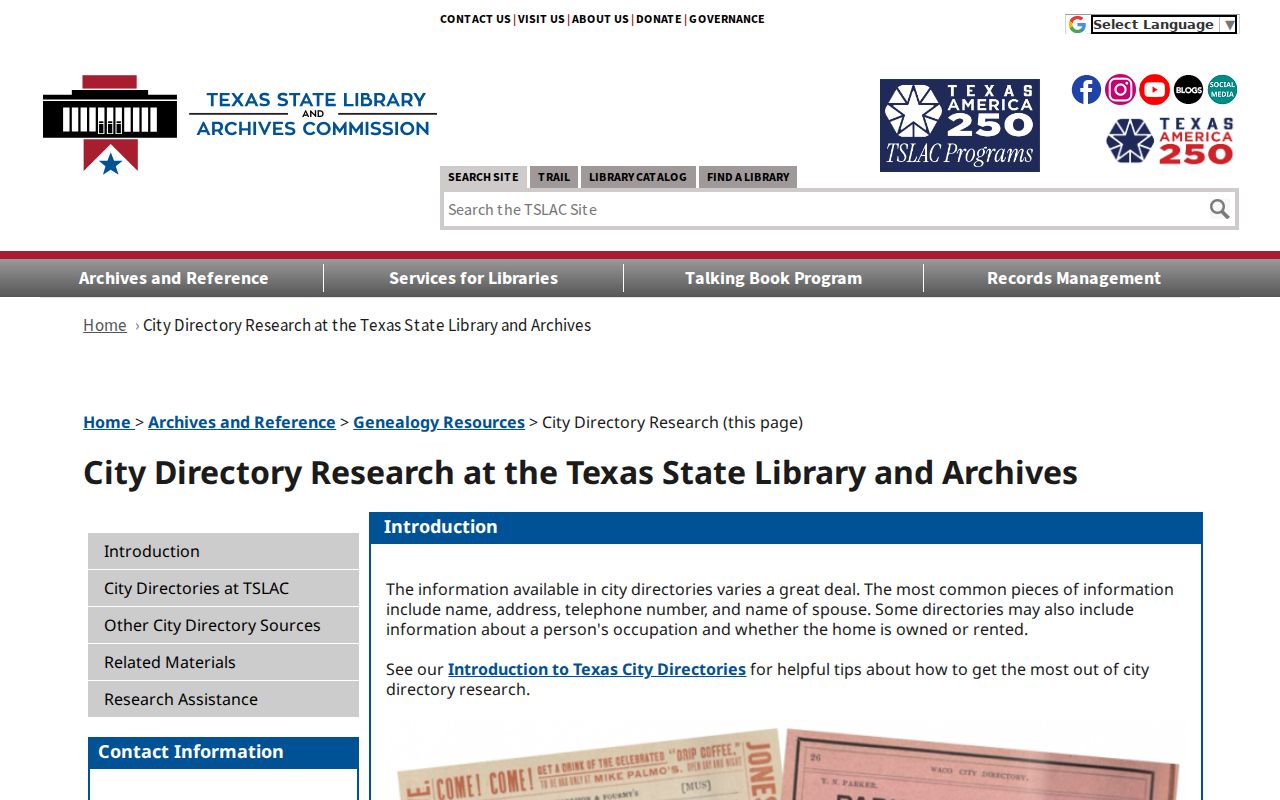
The resource supports a source-by-source search: identify the title and year first, then record whether the volume actually reaches the Converse area.
Note: The Converse library catalog had a dated notice about electronic access at inspection, so catalog availability should be checked again before relying on a temporary portal condition.
Converse Directory Coverage Gaps
One fact guides every Converse city directory search: TSLAC’s official run list has extensive San Antonio volumes but no dedicated Converse run. The documented San Antonio sequence includes 1879–80, 1881–82, 1883–84, 1885–86, 1887–88, 1889–90, 1891, 1892–93, 1895–96, 1897–98, 1899–1900, 1901–02, 1908, 1910, 1921–22, 1922–23, 1924–25, 1927–28, 1929–30, 1936–37, 1938–39, 1940–41, 1942–43, 1946, 1948, 1951, 1952–53, 1954, 1955–56, 1957–1984–85, 1986, 1987, 1988–89, 1990, 1992, and 1993.
That list describes volumes, not guaranteed coverage of each Converse address. Inspect the title page, geographic scope, street index, and scanned image before assigning a listing to the city. No live directory entry was opened during the research inspection, so no sample person, page, publisher, address, or notation should be invented. The absence of an entry may reflect the regional scope, a spelling change, a rural route, an unlisted household, a gap in the run, or a volume that did not cover the street.
Converse Library History as a Record Clue
The Converse Public Library has its own documented local story. Community volunteers from the city council, Lions Club, and Converse Grange helped establish it. The library opened on September 1, 1991, gained TSLAC accreditation in 1993, and later expanded after a voter-approved $800,000 project in 2015. Construction followed in 2017, and the grand reopening was March 7, 2018. Those dates do not establish directory holdings, but they give a sensible timeline for asking about council records, photographs, newspapers, project material, and local-history leads.
- 1877: Major James Converse purchased the townsite.
- 1878: the community received a post office.
- 1991: Converse Public Library opened.
- 1993: the library received TSLAC accreditation.
- 2018: the expanded library reopened after the 2015 approved project and 2017 construction.
Older family material may not use the present city name at all. The 1877 and 1878 landmarks explain why Bexar County, railroad, rural-route, church, school, property, or San Antonio-area terms can matter as much as “Converse” in an archive search.
Converse Municipal Records Are Not Directories
The City of Converse is a useful historical custodian, but it does not appear to publish a general resident directory. Municipal records are distributed by department. Permits and inspections, code-compliance material, public meeting records, municipal court matters, public works, and boards can preserve address or name context for a defined event. SmartGov advertises parcel search, permits, drawings and documents, inspection requests, and pending or issued permit activity. The inspected public landing page did not establish its complete public search fields or earliest available year.
A defined record that is not online can be requested from the City Secretary’s Office at 406 S Seguin Rd, Converse, TX 78109. The Converse public-information form asks for a detailed description, date, contact information, and a preference for digital delivery, paper copies, or inspection. Its stated charges can include copies, labor, supplies, postage, retrieval, and overhead. Ask for an existing record class and date range, not a new list of people.
Converse Subdivision Names as Directory Clues
Subdivision vocabulary can improve a historic directory search when a street name is common or a regional volume uses development wording. Converse’s brush-pickup zones include names such as Bridge Haven, Knox Ridge, Nottinghill, Scheel Gardens, Hanover Cove, and Copper Canyon. Those groupings are operational, not legal neighborhood boundaries, but they can help normalize a street or development spelling before checking a parcel, plat, deed, or regional title.
The Texas HOA management-certificate database is a second organization map. Research observed Converse or Bexar entries including Bridgehaven, Prairie Green, Vista Real Converse, Horizon Pointe, Scheel Farms, Hanover Cove, Knox Ridge, and other association names. A management-certificate search can identify an association and filing relationship, but its own disclaimer does not guarantee completeness, reliability, or validity. It is not a member roster and cannot establish who lived in a subdivision.
Reading a Converse Directory Entry
City directories can be dense. Their useful fields should be transcribed as printed, along with the title, year, page, and image link. The research supports these as common possible fields, not as a promise that every regional volume shows each one. Copy uncertainty and abbreviations faithfully. A person’s name may appear at a particular address while a spouse, telephone, business, occupation, or ownership mark appears only in some volumes.
| Name | Record the surname, initials, suffix, and spelling exactly as printed. |
|---|---|
| Address | Capture the house number, street, unit or route wording, and any cross-reference. |
| Telephone | Use as a dated printed field only; do not treat it as a current contact record. |
| Family or occupation notation | Spouse, occupation, and owner or renter notation may appear and should retain the volume’s wording. |
| Citation | Keep the title, year, page, image, and stated geographic coverage with the transcription. |
- Criss-cross directory
- An address- or street-order directory section used to seek a dated listing when the surname is unknown.
- Householder index
- An arrangement that groups or identifies a household by the directory’s editorial method; it may not represent every person present.
- Abbreviation key
- The volume’s explanation of short labels and symbols. Capture it before interpreting a residence, business, or ownership mark.
A historic directory hit can be compared with a deed, probate file, map, census image, obituary, or newspaper only after checking dates and relationships. The Converse resident lookup path is better for a modern source-specific verification than for extending a historical listing into a current claim.
Digitized Converse Directory Routes
The University of North Texas Portal to Texas History has a digitized City Directories collection with nineteenth- and twentieth-century city, business, and telephone directories. Its indexed material can expose names, addresses, and telephone information. The collection is a practical first screen for regional titles, but an item must still be opened to identify its title, publisher, year, page, and geographic reach. The absence of a dedicated Converse run remains important even when a broader San Antonio item is searchable.
UNT’s digitized City Directories collection provides the online collection entry point for this regional work.
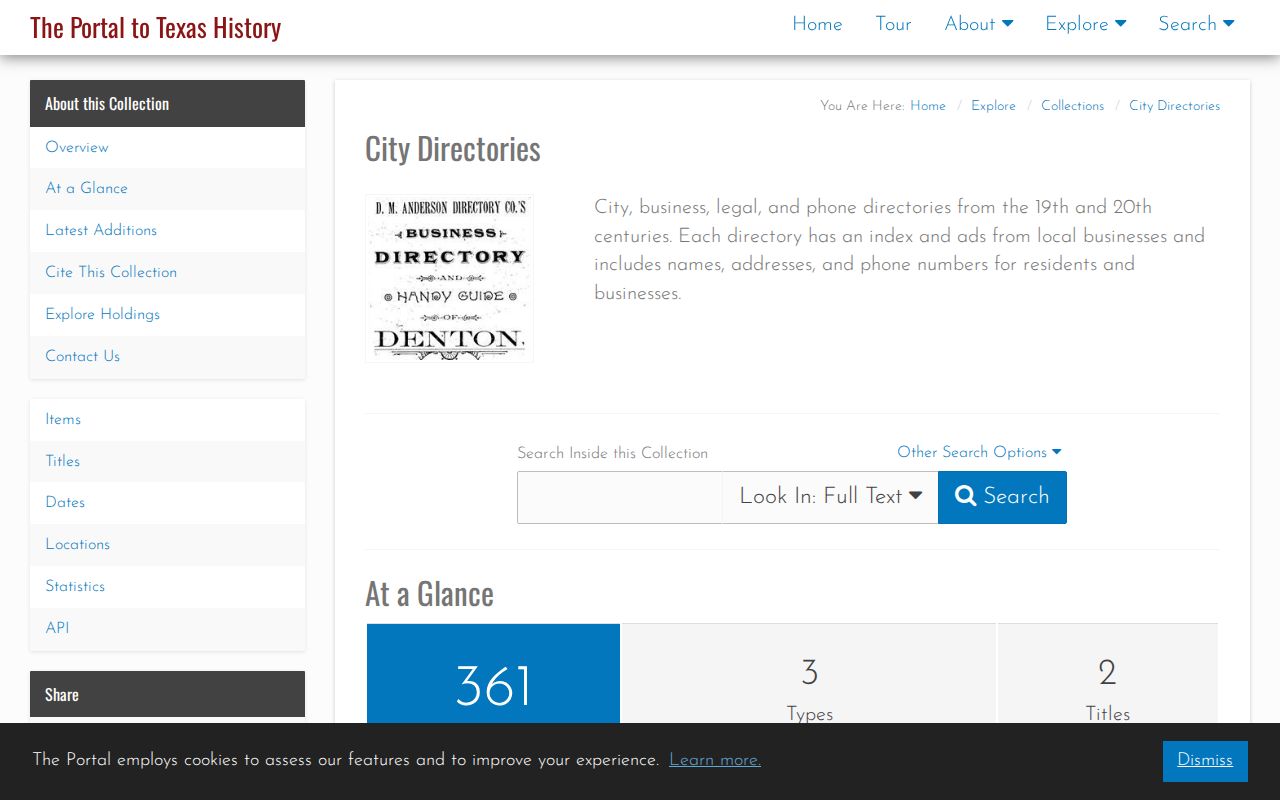
The digitized interface is most useful when a search result is saved with the original volume and image context rather than copied as an isolated name.
San Antonio Municipal Archives Digital Collections offer a second online path for regional maps, deeds, and historical records. Its birth records, death records, city block tax maps, city engineers maps, and city deeds have collection-specific dates. They are San Antonio municipal materials and must be labeled that way.
Bexar Microfilm Around Converse Directories
When the regional directory shelf stops, Bexar microfilm can keep a historical Converse trail moving. TSLAC documents county deed records beginning in 1837 through 1889 on microfilm, with direct indexes on reels 1019373 A–G, 1019374 H–R, and 1019375 S–Z. Reverse indexes use reels 1019376 A–G, 1019377 H–M, and 1019378 N–Z. The direct and reverse split is useful when a known party, rather than a street, is the first anchor.
TSLAC also lists Bexar marriage records from 1837–1926, probate minutes from 1837–1913, naturalization declarations from 1852–1906, and district-court civil minutes from 1836–1907. These collections can answer a different historical question after a directory name is found. Several deeds-of-trust volumes were not filmed, and no volume Q exists. A missing microfilm image can therefore be a documented collection gap, not a conclusion about a family.
Spanish-Mexican Bexar records widen the historical frame further, including land grants, agreements, estate material, and mission records from the eighteenth and early nineteenth centuries. Such records predate modern Converse and should not be relabeled as municipal directory records.
Note: Use the reel number, volume, index direction, image or page, and access date in a research note so another reader can distinguish a true no-hit from an unfilmed gap.
Tracing Converse Directory Households
A household trail works best as a dated sequence. Begin with the earliest confirmed regional volume, then move forward only where the title actually covers the relevant area. Copy the printed name, address, spouse or occupation notation if present, and page. Pair each record with a time-appropriate source. A directory can bridge census decades, but it should not be treated as a census substitute or a claim of continuous residence.
- Find a likely surname, historic street spelling, rural route, subdivision, or nearby San Antonio reference in a documented volume.
- Record the full title, year, page, image, and the volume’s geographic coverage before accepting a listing as a Converse lead.
- Follow the surname and address across later available volumes, noting spelling changes, address changes, and the years that are absent.
- Pair the dated entries with the applicable census image, Bexar deed or probate record, newspaper, map, church, cemetery, or marriage source.
- Stop the claim at the date of the record and describe the person as a listing, party, owner, or family connection rather than a present resident.
A disappearance can mean a move, death, an editorial omission, a geographic change, or a missing volume. Verify the next record with the proper collection rather than deciding why the name vanished from one directory.
Converse Directory Search Terms
Search terms should reflect the record era. Try a household surname with variants, the exact and alternate street spellings, a rural-route expression, subdivision wording, Bexar County, and nearby San Antonio references. The city’s later municipal identity should not be projected backward onto every historic document. A directory entry can be real while its location is regional, rural, or outside a later city boundary.
The Bexar County Historical Commission is a useful countywide source for historic markers, cemeteries, oral history, and preservation work. San Antonio Public Library Texana/Genealogy and established local-history organizations add newspaper, map, church, cemetery, and archival leads. Confirm the title’s place and date before using it in a Converse family narrative. No confirmed Converse-specific obituary-index holding was located in the research, so an obituary lead requires a separate collection check.
Converse Directory Evidence Limits
A Converse city directory result is strongest when it is called what it is: a dated publication entry. It can locate a name, address, telephone, spouse, occupation, or owner/renter notation if the item shows that field. It cannot by itself prove the person was at the address before or after publication, establish every member of a household, or resolve a modern address. A directory’s geographic coverage, index method, and omissions matter as much as the line of text.
Use a library counter, TSLAC, the archive, regional digital collections, and the relevant county or city custodian as complementary channels. Preserve source dates, do not copy protected identifiers from unrelated records, and avoid turning a historic household trail into a profile of living people. A careful citation makes a later correction possible without overclaiming what a directory can show.